
Knowledge Base
Single-Driver In-Ear Monitors
The case for doing more with less — a closer look at why a single dynamic driver remains the benchmark for professional monitoring and critical listening.
A single-driver IEM delivers across several dimensions at once: audio performance, physical size, fit security, and passive noise isolation. Rather than managing complexity, a single dynamic driver keeps the signal path simple — and simplicity has direct benefits for how the monitor sounds and how reliably it stays in place under stage conditions.
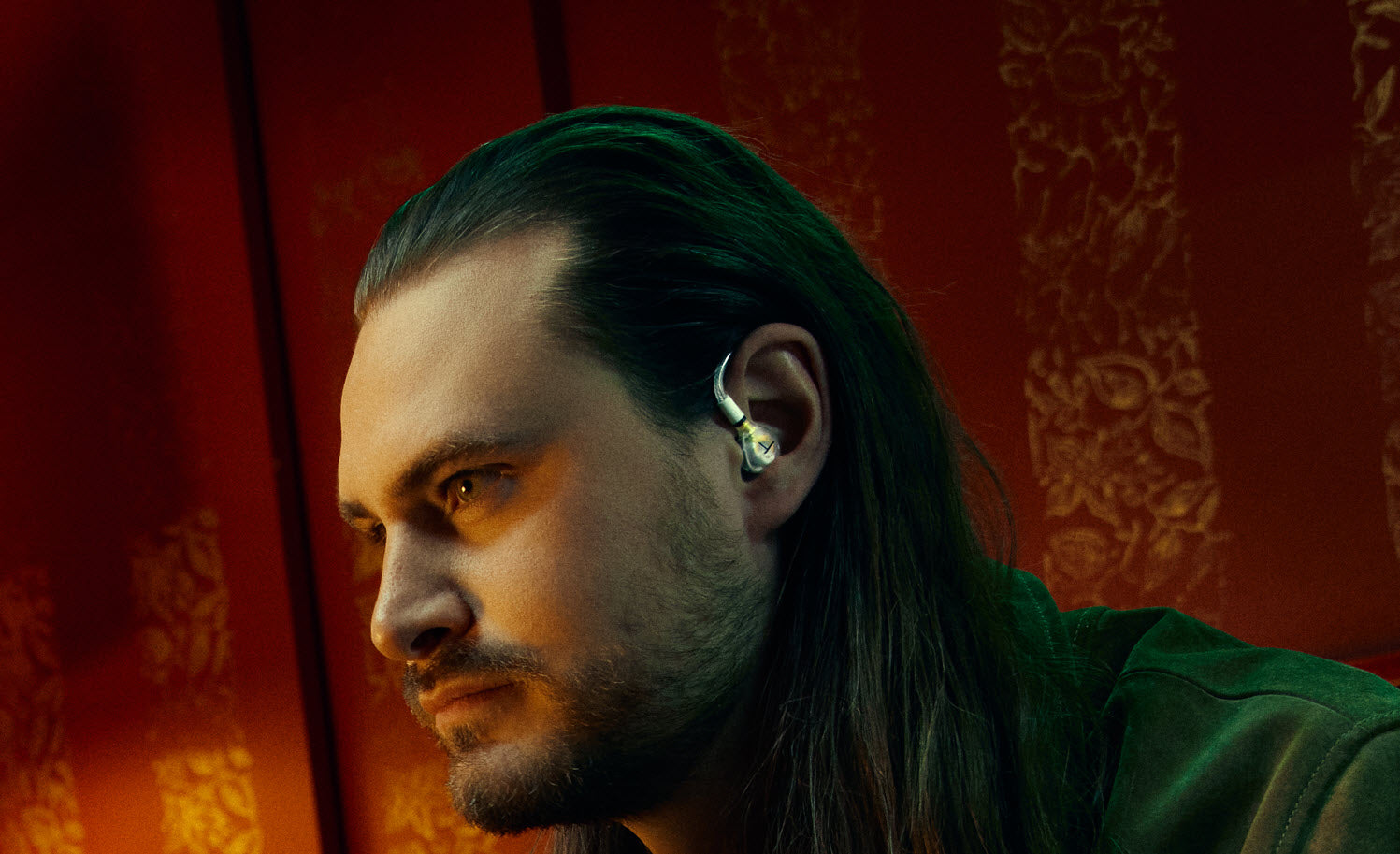
Size is often the first thing overlooked and the first thing felt on stage. A compact single dynamic driver allows for a smaller, more ergonomic housing — and that translates directly into a better seal within the ear canal, improved wearing comfort, and greater passive noise isolation.
A proper seal is critical for consistent low-frequency reproduction. If the IEM doesn't sit firmly, bass response becomes unpredictable and the monitor can dislodge mid-performance. Multi-driver systems, by contrast, require room for additional drivers, crossover components, and acoustic chambers — making compact housings significantly harder to achieve.
A single dynamic driver reproduces the full frequency spectrum from one acoustic source. The result is a more natural presentation, better phase coherence, and a highly accurate impulse response — qualities that matter most in professional monitoring, where precise imaging, realistic transients, and tonal consistency are essential.
Single-driver designs also tend to produce stronger low-frequency reproduction and more natural bass extension, without relying on complex acoustic tuning tricks. Multi-driver architectures, by comparison, require crossovers and acoustic routing between drivers — which can introduce phase shifts, timing inconsistencies, and audible transitions between frequency ranges.
On a live stage, you're surrounded by significant ambient sound — drum kits in particular generate substantial SPL at close range. Strong passive isolation lets you hear the mix accurately at lower monitor volumes, which means you play with greater precision and protect your hearing over time.
Not at all. Audiophiles and dedicated listeners who value a highly unified sonic presentation — and the benefit of maximum sound isolation — find that single-driver IEMs offer a pure and genuinely engaging listening experience, regardless of the context they're used in.