
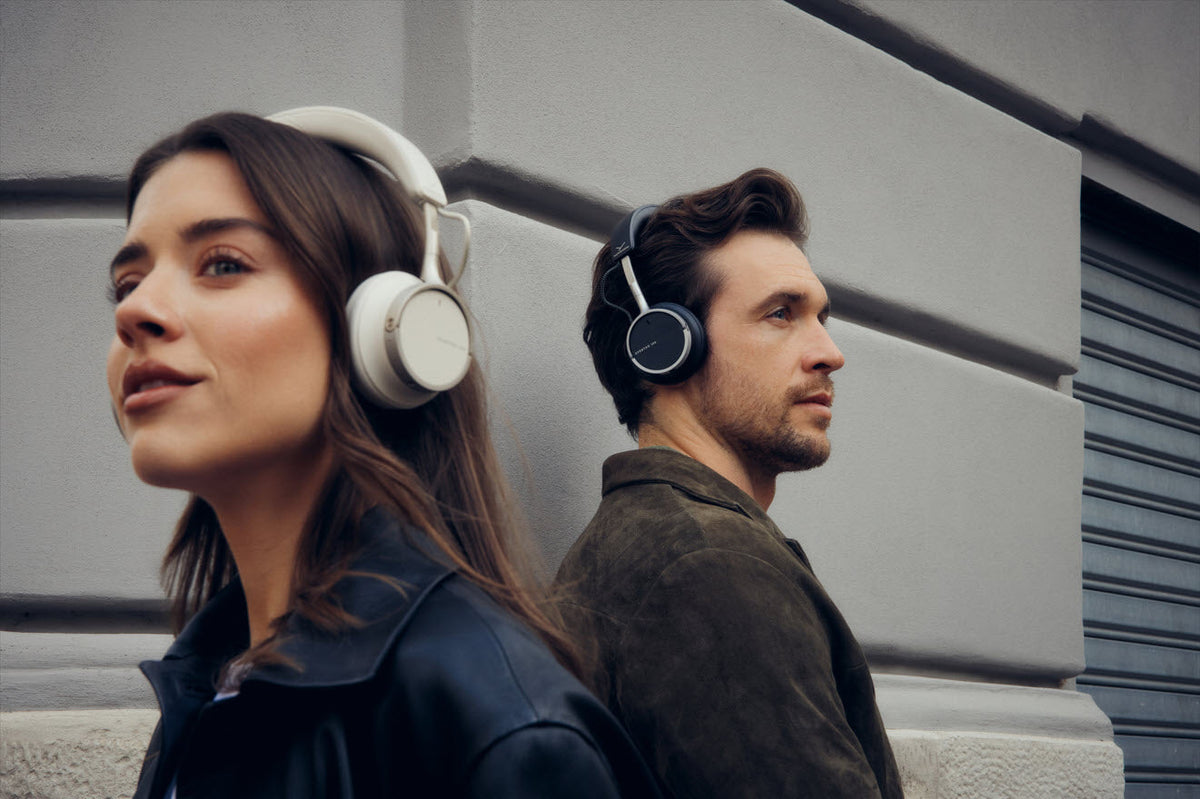
Whether in-ear, on-ear or over-ear – wireless headphones make everyday life easier and give us a sense of freedom; that said, the most important thing is that your headphones and playback device work harmoniously together.
Put on your headphones, press play and enjoy your favourite song or podcast in perfect sound quality - all via Bluetooth® For many, listening to music without Bluetooth headphones is hardly imaginable anymore.
But the final sound quality doesn’t just depend on the headphones or speakers – it also depends on the Bluetooth® audio codec being used. Whether SBC, AAC, aptX™ or LDAC – each codec processes audio data differently. This affects not only the sound quality but also how stable the connection is, and whether audio and video stay in sync when watching content.
In this article, we show you what stands behind the four most important codecs, how they differ – and which one may best fit your setup.
A quick overview of the main Codecs.
SBC is the basic codec – stable, but offering the lowest sound quality.
AAC delivers consistently high quality, especially on Apple devices.
aptX™ Adaptive (including aptX™ HD and aptX™ Low Latency) and aptX™ Lossless provide, depending on the variant, more detail, lower latency, or adaptive quality.
LDAC is the highest‑quality codec on many Android devices (up to 990 kbps).
Important to note#
The codec matters and influences sound – but drivers and DSP remain decisive!
So, what are Bluetooth® audio Codecs?
A Bluetooth® audio codec is a method used to compress, transmit and decode audio data. When you listen to music via Bluetooth®, the data is sent from your smartphone or laptop to your headphones – not in its original form but compressed.
All classic Bluetooth® codecs such as SBC, AAC and aptX™ Adaptive are lossy. The codec determines how strongly the data is compressed and how much detail is lost. It attempts to remove information that is below the human hearing threshold. Therefore, these methods are considered “lossy”. Some methods are good (SBC), some are better, and some can scale the quality depending on available bandwidth (meaning they can omit more or less).
It’s all about a sensitive balance: sound quality, data rate, connection stability and latency must work in harmony. Each codec sets its own priorities. Some focus on audio fidelity, others on low delay, long range or wide compatibility.
In short: the codec plays a major role in how good your music sounds over Bluetooth® – and how reliable the connection is. Why are Bluetooth® audio Codecs important?
Choosing the right codec can make a noticeable difference – especially if you care about sound quality, audio‑video synchronisation, or gaming with minimal delay.
A few examples:
Sound quality: High‑quality codecs like aptX™ Lossless or AAC can transmit more detail and dynamics than the standard SBC codec.
Latency: For gaming or video streaming, it’s crucial that audio and image stay in sync. Codecs with low latency, such as aptX™ Low Latency or aptX™ Adaptive, have a clear advantage here.
Compatibility: Not every codec works on every device. While AAC shines on Apple devices, aptX™ is more common in the Android ecosystem.
For you as a user, this means: the codec should match your device, your usage habits and your sound preferences. That’s why many headphones today support multiple codecs – so you remain flexible whether you’re listening to music, watching videos, or gaming.
And also, good to know:
Many Android devices offer LDAC from Sony. With up to 990 kbps, LDAC provides one of the highest bandwidths among classic Bluetooth® codecs, enabling more detail – provided the connection is stable. Parallel to this, the new Bluetooth® generation increasingly relies on LC3, the efficient codec of Bluetooth® LE Audio, which will become more widespread in the coming years.
Which Bluetooth® audio codec is best for me?
SBC – The standard Bluetooth® Codec
SBC is the standard codec on nearly all Bluetooth®‑enabled devices. It ensures stable transmission but offers the lowest sound quality compared to AAC, aptX™ or LDAC. If high sound quality is important to you, choose Bluetooth®‑enabled devices that support aptX™, AAC or – on many Android devices – LDAC.
AAC – Apple’s favourite
AAC (Advanced Audio Coding) is particularly popular on Apple devices such as iPhones, iPads and Macs. AAC delivers consistent and high‑quality audio – especially on Apple devices. On Android, however, AAC performance can vary greatly depending on implementation.
aptX™ Adaptive – The Audiophile’s Codec
aptX™ Adaptive, developed by Qualcomm, dynamically selects the best available variant:
aptX™: The classic. aptX™ can deliver noticeably better quality than SBC, depending on how it’s implemented on the smartphone and in the headphones. The benefits are not guaranteed in every setup.
aptX™ HD: For more detail and dynamics – ideal for high‑quality music streaming.
aptX™ Low Latency: Optimised for the fastest transmission with the lowest latency. Perfect for lip‑sync video playback or gaming.
aptX™ Lossless – The lossless option
aptX™ Lossless: Enables theoretically lossless 16‑bit/44.1 kHz transmission but is dependent on available bandwidth. “Lossless” is therefore not always achieved fully.
Whether AAC, aptX™ Adaptive or aptX™ Lossless is the right Bluetooth® audio codec for you depends heavily on the device you’re using. While aptX™ is common on Android and Windows devices, iPhones and iPads rely primarily on AAC.
LDAC – The high-resolution Codec for Android
LDAC, developed by Sony, is one of the highest‑quality Bluetooth® audio codecs in the consumer market. It can transmit at up to 990 kbps depending on connection quality – allowing far more detail than classic codecs like SBC, AAC or aptX™.
LDAC operates adaptively in three quality levels (990 kbps, 660 kbps and 330 kbps) and adjusts the bitrate dynamically to the connection stability. This ensures reliable performance on the go, and high fidelity at home under optimal Bluetooth® conditions.
LDAC is natively supported by many Android smartphones and is therefore an excellent choice for users who prioritise detailed, high‑resolution Bluetooth® audio. Especially with high‑quality music streams, complex arrangements or quiet acoustic tracks, LDAC can audibly deliver more nuance – provided both smartphone and headphones support the codec.
beyerdynamic Bluetooth® headphones and their supported Codecs
On-ears:
AMIRON ZERO: AAC, SBC
AMIRON 200: AAC, SBC
In-ears:
AMIRON 100: AAC, SBC
AMIRON 300: AAC, SBC, LDAC
Over-ear-/On-ear headphones:
AVENTHO 100: AAC, SBC, aptX™ Adaptive, aptX™ Lossless
AVENTHO 200: AAC, SBC, aptX™ Adaptive, aptX™ Lossless
AVENTHO 300: AAC, aptX™ Adaptive, aptX™ Lossless, LE Audio
A special note:
MacBooks reliably support AAC (and SBC). aptX™ was supported in earlier macOS versions but is no longer consistently available on newer devices and system versions.
For those who enjoy watching films or series, we recommend models like AVENTHO 100, AVENTHO 200 or AVENTHO 300. Thanks to aptX™ Low Latency (LL), audio is transmitted with virtually no delay – ideal for lip‑sync sound during binge‑watching. Proper Pairing:
High‑quality transmission is only possible if both devices support the same Bluetooth® audio codec. That means not only your headphones must support codecs like aptX™ or AAC, but also your playback device – for example your smartphone, tablet or PC.
If your smartphone supports aptX™ but your headphones don’t (or vice versa), audio will automatically fall back to SBC. The same applies to AAC with iPhones and iPads. If you’re using headphones with aptX™ Lossless but your smartphone only supports aptX™, the connection uses aptX™.
Good to know: If several codecs are available, the devices automatically negotiate the best possible option.
Conclusion: The right Codec for your sound
Bluetooth® audio codecs like SBC, AAC, aptX™ Adaptive and aptX™ Lossless influence sound quality – but they’re only part of the picture. Driver technology, DSP processing and the overall headphone tuning also play a major role.
The differences often lie in the details: sound quality, latency and compatibility determine how good your listening experience really is.
Whether you choose aptX™ Adaptive for flexible streaming, AAC for your iPhone, or aptX™ Lossless for lossless transmission – the most important thing is that your headphones and playback device work harmoniously together. Our models support multiple codecs to give you exactly the flexibility you need.
BLUETOOTH AUDIO CODEC FAQ’S
Q: What are Bluetooth Audio Codecs?
A: A Bluetooth® audio codec is a method used to compress, transmit and decode audio data. When you listen to music via Bluetooth®, the data is sent from your smartphone or laptop to your headphones – not in its original form, but compressed.
Q: Why are Bluetooth Audio Codecs Important?
A: Choosing the right codec can make a noticeable difference – especially if you care about sound quality, audio‑video synchronisation, or gaming with minimal delay.
Q: What are the current main Bluetooth Audio Codecs?
SBC – The standard Bluetooth® Codec
SBC is the standard codec on nearly all Bluetooth®‑enabled devices. It ensures stable transmission but offers the lowest sound quality compared to AAC, aptX™ or LDAC. If high sound quality is important to you, choose Bluetooth®‑enabled devices that support aptX™, AAC or – on many Android devices – LDAC.
AAC – Apple’s favourite
AAC (Advanced Audio Coding) is particularly popular on Apple devices such as iPhones, iPads and Macs. AAC delivers consistent and high‑quality audio – especially on Apple devices. On Android, however, AAC performance can vary greatly depending on implementation.
aptX™ Adaptive – The Audiophile’s Codec
aptX™ Adaptive, developed by Qualcomm, dynamically selects the best available variant.
aptX™:
The classic. aptX™ can deliver noticeably better quality than SBC, depending on how it’s implemented on the smartphone and in the headphones. The benefits are not guaranteed in every setup.
aptX™ HD:
For more detail and dynamics – ideal for high‑quality music streaming.
aptX™ Low Latency:
Optimised for the fastest transmission with the lowest latency. Perfect for lip‑sync video playback or gaming.
aptX™ Lossless – The lossless option
aptX™ Lossless: Enables theoretically lossless 16‑bit/44.1 kHz transmission but is dependent on available bandwidth. “Lossless” is therefore not always achieved fully.
Whether AAC, aptX™ Adaptive or aptX™ Lossless is the right Bluetooth® audio codec for you depends heavily on the device you’re using. While aptX™ is common on Android and Windows devices, iPhones and iPads rely primarily on AAC.
LDAC – The high-resolution Codec for Android
LDAC, developed by Sony, is one of the highest‑quality Bluetooth® audio codecs in the consumer market. It can transmit at up to 990 kbps depending on connection quality – allowing far more detail than classic codecs like SBC, AAC or aptX™.
LDAC operates adaptively in three quality levels (990 kbps, 660 kbps and 330 kbps) and adjusts the bitrate dynamically to the connection stability. This ensures reliable performance on the go, and high fidelity at home under optimal Bluetooth® conditions.
LDAC is natively supported by many Android smartphones and is therefore an excellent choice for users who prioritise detailed, high‑resolution Bluetooth® audio. Especially with high‑quality music streams, complex arrangements or quiet acoustic tracks, LDAC can audibly deliver more nuance – provided both smartphone and headphones support the codec.
The right Codec for your sound
Whether you choose aptX™ Adaptive for flexible streaming, AAC for your iPhone, or aptX™ Lossless for lossless transmission – the most important thing is that your headphones and playback device work harmoniously together.
If you’re unsure which codec is right for you, check the technical specifications of your playback device!
A revision of an article originally published by beyerdynamic Germany.
We hope that this article gives you a better understanding of Bluetooth Audio Codecs.
The Bluetooth® word mark and logos are registered trademarks of Bluetooth SIG, Inc., and any use of such marks by beyerdynamic is under license. Other trademarks and trade names are the property of their respective owners.